Hizaki (hiss-ah-kee)
The ‘Hizak Caste’ is responsible for maintaining the operational and formative structure of the Citizenry. This includes roles such as governance, education, administration, and management. Derisively called ‘brainers,’ and pejoratively known as ‘hizzahs,’ they organize and sustain the populace. Hizaki are rigidly intellectual and compulsive about tradition and order.
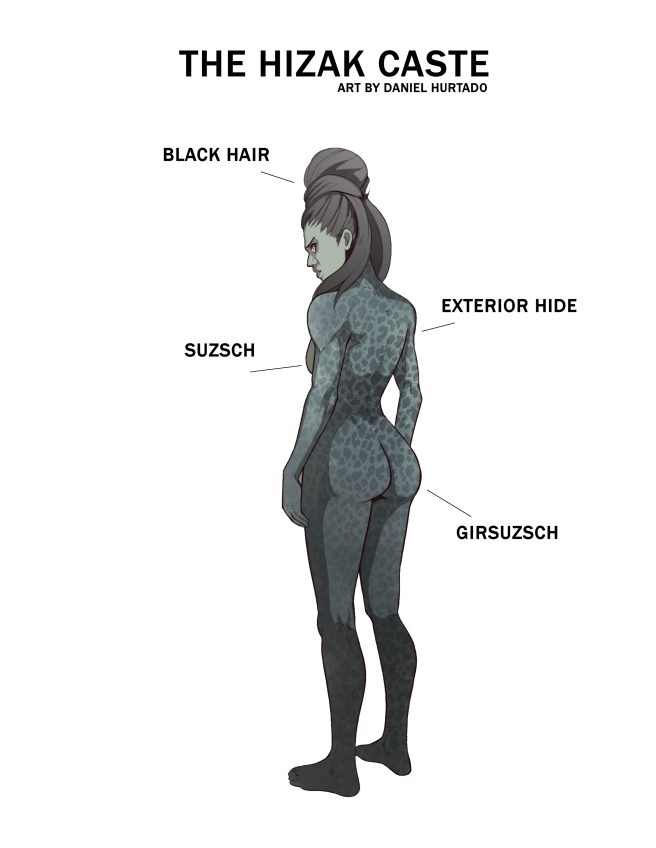
Anatomical Distinctions
Hizaki are born colorblind. Early geneticists trying to isolate the chromosome strand responsible found that the condition is polygenic. Attempts to correct the anomaly caused irreparable damage, typically to the genes responsible for visual development.
The Hizaki possess a unique anatomical feature—the largest girsuzsch (buttocks) of any other caste, despite their thin physique. Their pronounced gluteal muscles are a distinctive trait that sets them physically apart from their sister castes.
Tusikux (dopamine) receptors in the Hizaki thalamus are lower than in any other caste, allowing for more thought processes and problem-solving. Yulikerotine (norepinephrine) levels are at their highest in Hizaki.
Social Elements
Hizaki are prone to intellectualism, often at the expense of social empathy. When not engaged in vocational practice, an Hizak compartmentalizes relationships based on perceived needs and wants. They prefer the company of other Hizak for socialization but interact with other castes vocationally and sexually. This compartmentalization is often perceived as coldness, but it is a deeply ingrained aspect of their social behavior.
- Femmar | Femarctic Castes
- Bizaki | Hizaki | Marixi | Subaki & Zaxiri
- Femarctic Anatomy
- Diseases and Disorders
- Hizaxikogatix (Hizak) | Ilitux (Marix)
- Bizrudap (Bizak)
- Fematcolixa (Subak) | Axiboxis (Zaxir)
- Ramaxian Health Care
- Femaxik: Femarctic Hygiene | Hibernation
- Death in Femarctic Society
 FEMITOKON
You must be logged in to post a comment.