A stone plaque on the surface ice of the Gulidox Plain reads: Only the Strongest Are One
History: The First Trial
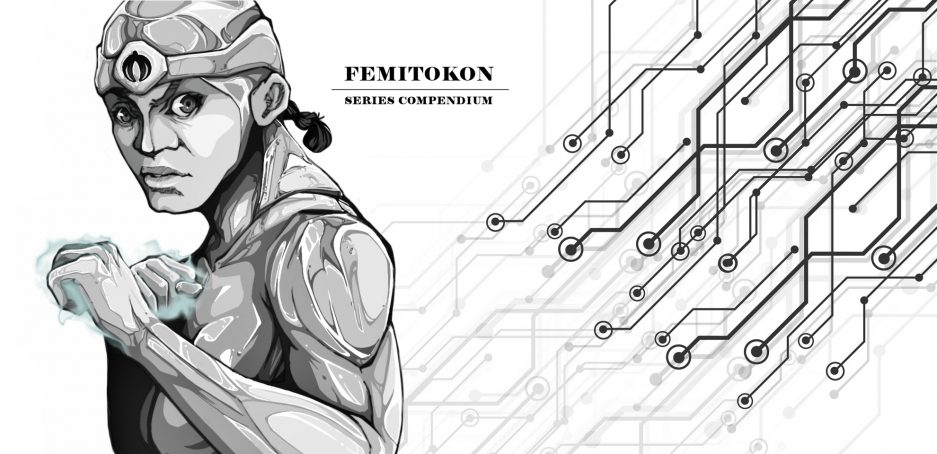
In the early weeks of cohabitation beneath the ice, the original marixi subjects created by the Femaki’xirpaxul exhibited aggression directed toward other castes. Marix leader Femitokon sequestered all 18,000 members of her caste, taking them to the surface and residing within the snow over the Vostulak (Lake Vostok). Cut off from proper socialization, they engaged in low-threshold battles that often ended in the death of many able-bodied marixi. Concerned by this crude thinning of the herd, Fusofitakil sent the zaxiri to live among them after zaxiri proved problematic among subaki-led social groups (see the Zaxiri Exile). The result proved detrimental, in part, due to the presence of hizaki. Many hizaki joined their zaxiri lovers on the surface and formed relationships with marixi. Hizaki cliquishness (called tribal warfare) caused social division among the marixi, which often led to physical quarreling.
Femitokon chose to weed out marixi incapable of cohesion, venturing back below the ice to enlist Fusofitakil’s help. Together, they planned a mass fight to the death. Fusofitakil gathered the Hizaki elite, while Femitokon marched every Marixi to the Gulidox Plain (h. Dome Argus). There, Femitokon proclaimed that only the strongest marixi left alive could rejoin the femmar below. The most aggressive acted out first, killing those around them, before getting themselves killed. Those who refused to attack their peers formed into teams and pairs to survive the melee. Of the estimated 18,000 Marixi, only 5,482 survived.
Today, the Final Trial stands as a symbol of the marixi culture. Each generation of marixi marches to the surface at age 17 to partake in this final fight, a tradition that completes their caste training. This is not just a combat trial, but a test of survival, skill, and determination. Those who emerge victorious, standing without their suit-sensors marking them as dead, earn the right to acquire rank and advance to an elevated duty assignment.
Second-Gen Discipline, Fifth-Gen Benevolence
Caregivers of the First Gen enacted a collective organization that brought marixi born of the Second Gen to Orta for training. This regimented living, combined with aggressive team training, molded controllable soldiers. In the production of the Fifth Gen, a small percentage of marixi possessed a chromosomal anomaly that enabled altruism. Orta weeds out these altruistic marixidoe in their pre-teens and conscripts them to the Citizens Guard, an organization created to police the citizenry.
Also in the era of the Second Gen, Orta exiled marixi who fell within the first two hours of the Final-Trial to a lifetime of surface duty; in the Fifth Gen era, however, Sixth-Gen finalists falling in the first hour got to strike for sponsorship in growing sports culture of privately financed, dome-sponsored athletic programs, while those falling within the second hour worked the surface, yet could strike again for rank 25 years later.
Final Trial
At the end of their seventeenth year, brooders hibernate alone for 15 days. While asleep, they undergo automated exams and get measured for a Mortay Suit, a single-layer mock combat skin explicitly designed for the ‘Final Trial.’ These black, full-body survivability suits cover the femarctic hide, emulating the naked fighting that Femitokon and her marixi took part in during the Marixi Purge.
After awakening from their last hibernation as a brooder, the marixi venture out for their first Liberty. Brooders have 20 hours to go anywhere they please and do anything they want on a night known throughout the citizenry as Orta Attack. At ‘return-call,’ they put on their Mortay Suits and are marched to the surface with only a rod of synthetic whalebone (dultax). Surrounding the battle ice are young Hizaki who have graduated from Mynu and earned their place in the Marixi Administration. It is these hizaki who give the Shout, triggering the adrenaline-filled marixi to fight. An Orta-bound hizak’s role in the Final Trial is not just ceremonial. It too is a test, as their witnessing this melee sets the stage for life among a temperamental caste that they must remember to administer to the fullest extent of their abilities.
The Mortay Suit contains a blend of microscopic silica particles suspended in a fluid form of polyethylene glycol. Hizaki designers refer to the glycol inserted into the skin suit’s netting as Basal Anatomy Detection Webbing, or BA-WEB. Bizaki engineers tasked with shooting the mix into the netting call it ‘BLUBBER. These webbed microsensors are absorbed and held in place by the suit’s silica particles, which adhere to the wearer’s physical anatomy and nervous system via bio-wiring technology. Microsensors calculate proper trauma during combat drills that employ non-fatal striking weapons (dultax). Dultax impacts register as mortal injuries received from sharpened weapons (like those employed by the original marixi during the purge.) Acting as its wearer’s naked hide, it measures the impact of a blow, calculating blood loss, and then shuts down the wearer’s body accordingly. Sensor activation indicates trauma and paralyzes those portions amputated or mutilated; full sensor activation paralyzes the whole body, indicating the combatant is dead.
During the melee, those whose Mortay Suits list them as fatally injured* cannot continue fighting due to paralysis. Those whose uniforms list them as being in critical condition can continue, but their time is limited, as portions of their suits render their bodies inoperable. Those left standing when the time runs out, with little to no injury, are the victors and thus eligible for the rank of Donmat. The last three combatants belong to Divisional, the other seven get to choose where they serve in Surface Operational. All ten finalists earn rank and the opportunity to study or physically trial in their chosen fields of service.
Those ‘killed’ during the first hour of their Final Trial lose their place in active service. Orta furloughs the fallen, who can compete for a chance to play in organized sports or find odd jobs among the citizenry. Those killed in the second hour earn exile to surface duty, but can strike for a position in Fleet during what is called a Secondary Final Trial; this fight takes place exactly 25 years to the day of her generation’s first Final Trial.
TRIAL RESULTS – NINTH THROUGH THE ELEVENTH
Orta Final Trial – 368 Combatants: Ninth Ramaxian Gen
- Last One Standing – Fusa Kul
- Last to Fall – Uli Zag
- Second Standing – Pita Dag
- Third Standing – Gid Ikat
- Fourth Standing – Tyle Hibz
- Fifth Standing – Daka Kil
- Sixth Standing – Tux Tol
- Seventh Standing – Dirg R’lx
- Eighth Standing – Odax Itat
- Ninth Standing – Pik Acari
- Tenth Standing – Kurgo Itad
Orta Final Trial – 296 Combatants: Tenth Ramaxian Gen
- Last One Standing – Fusada Kul
- Last to Fall – Bam Yuxi/Fos Tis
- Second Standing – Ibat Yixo
- Third Standing – Vaniav G’wo
- Fourth Standing – Zerix Julo
- Fifth Standing – Kurgo Gax
- Sixth Standing – Ryoz Julo
- Seventh Standing – Pita Wex
- Eighth Standing – Deltad Polvix
- Ninth Standing – Kirtat Fatu
- Tenth Standing – Bo Kilvx
Orta Final Trial – 368 Combatants: Eleventh Ramaxian Gen
- Last One Standing – Styba Balru
- Last to Fall – Fuzo Dox
- Second Standing – Tuso Vyx
- Third Standing – Zex Acari
- Fourth Standing – Gir Tabu
- Fifth Standing – Tirgo Su
- Sixth Standing – Kurg Itad
- Seventh Standing – Akat Avi
- Eighth Standing – Fusat Holix
- Ninth Standing – Zixol Gas
- Tenth Standing – Hibat Kil
- Cultivation of the Military Caste
- Toob | Brooder | Final
- Polar Air Command
-
- Lifeforms of the PAC
- Goruym | Jyrulix | Woxidat | Brigitat
- Lifeforms of the PAC
-
- Sorority of Defense
- Lifeforms of the SOD
 FEMITOKON