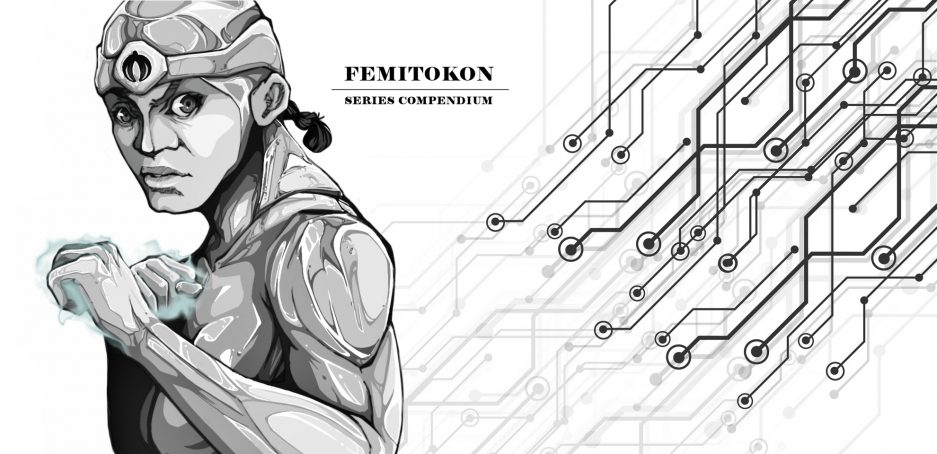
Digital document technology began when the original subject, Myanu, created a wearable headset that projected information from the Femaki’xirpaxul database into a holographic page viewed in front of the eyes.
The wearable duxo allowed users to parse information from the database without the need to sit or stand at an interface terminal. Ukel Systems streamlined Duxo headsets in the era of the Second Generation, designing ear and nose-bridge pieces capable of parsing clear, viewable documents from Odux handhelds and then Axico Readers.
In the era of the Tenth Generation, an institutional need for privacy prompted the creation of a disposable digital document that would not reveal information to those not intended to see it. In 2214, Brigitat Digitronics created a pliable paper-thin digital document device with touch interface capability. The Duxpak allowed those employed in administrative, medical, and military services to view disposable information without the need for a wearable headset. It also negated the need for portable Bivs for information sharing where privacy was paramount.
In the citizenry-market, the duxpak is a modern form of note-sharing between strangers and peers. Citizens recycle duxpak in Pak-Bins that destroy the devices immediately, retain their ingredients, and reconstruct new, blank duxpak within seconds.

 FEMITOKON
You must be logged in to post a comment.